
A 3-hour workshop for services and organisations
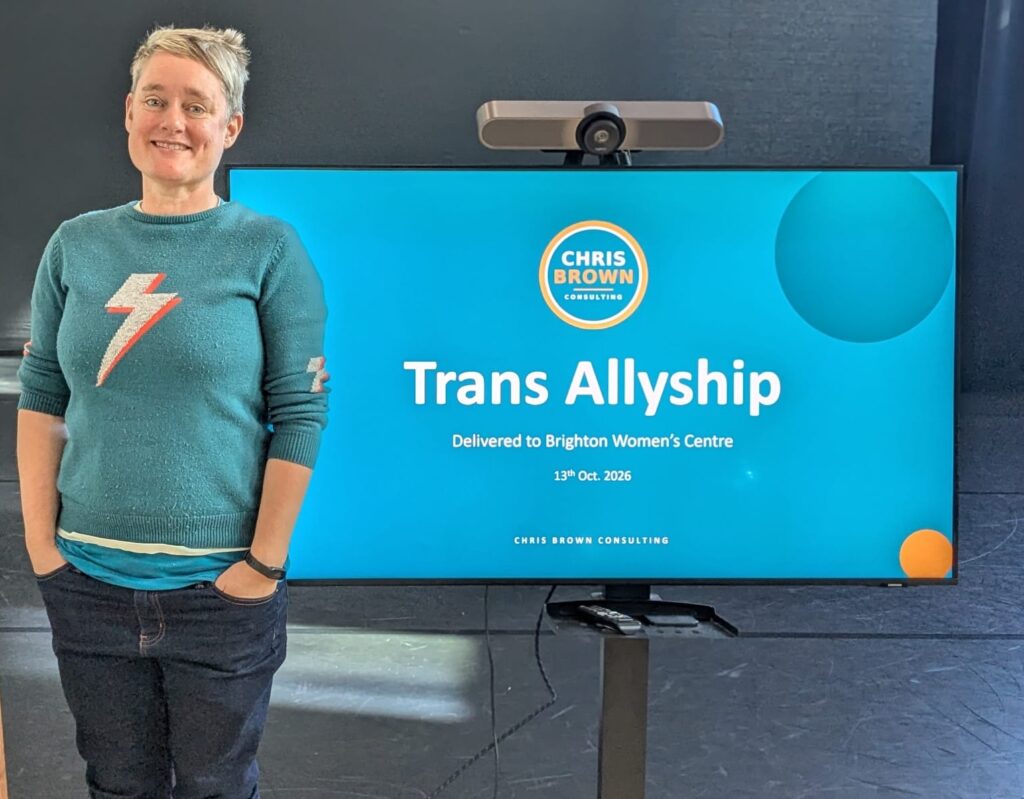
The law around sex and gender has shifted, and many organisations are unsure what it means for the people they serve and employ. This interactive 3-hour workshop helps teams understand what has and hasn’t changed, and move from good intentions to practical, confident action.
We begin with clear foundations on trans and non-binary identities, gender reassignment, the Gender Recognition Act and the legal meaning of sex. We then look at the Supreme Court ruling, the EHRC’s updated Code of Practice, and what they mean for service delivery and workplaces, including the impact on trans and non-binary communities and the wider scrutiny of single-sex spaces.
The core of the session introduces two models of allyship. The first is the move from ally to accomplice: sharing risk, de-centring ourselves and taking structural responsibility. The second is coalition, drawing on Emma Dabiri’s call to build solidarity from shared interests rather than charity, and on the idea of kyriarchy. Participants then put these ideas to work in two extended, role-based case studies drawn from real service contexts, with at least 25 minutes each.
You will
- Gain clear, accurate and up-to-date knowledge of the legal context
- Understand the difference between performative allyship and accomplice action
- Identify practical steps for organisations and for individuals
- Practise responding to realistic scenarios as frontline staff, managers and leaders
- Leave with a discussion sheet and resources to continue the work with your team
Format
3 hours with two 20-minute breaks, delivered in person or online. Best for groups of up to 16 people. Content can be adapted to your sector, policies and context.
Facilitated by Chris Brown, EDI learning consultant.