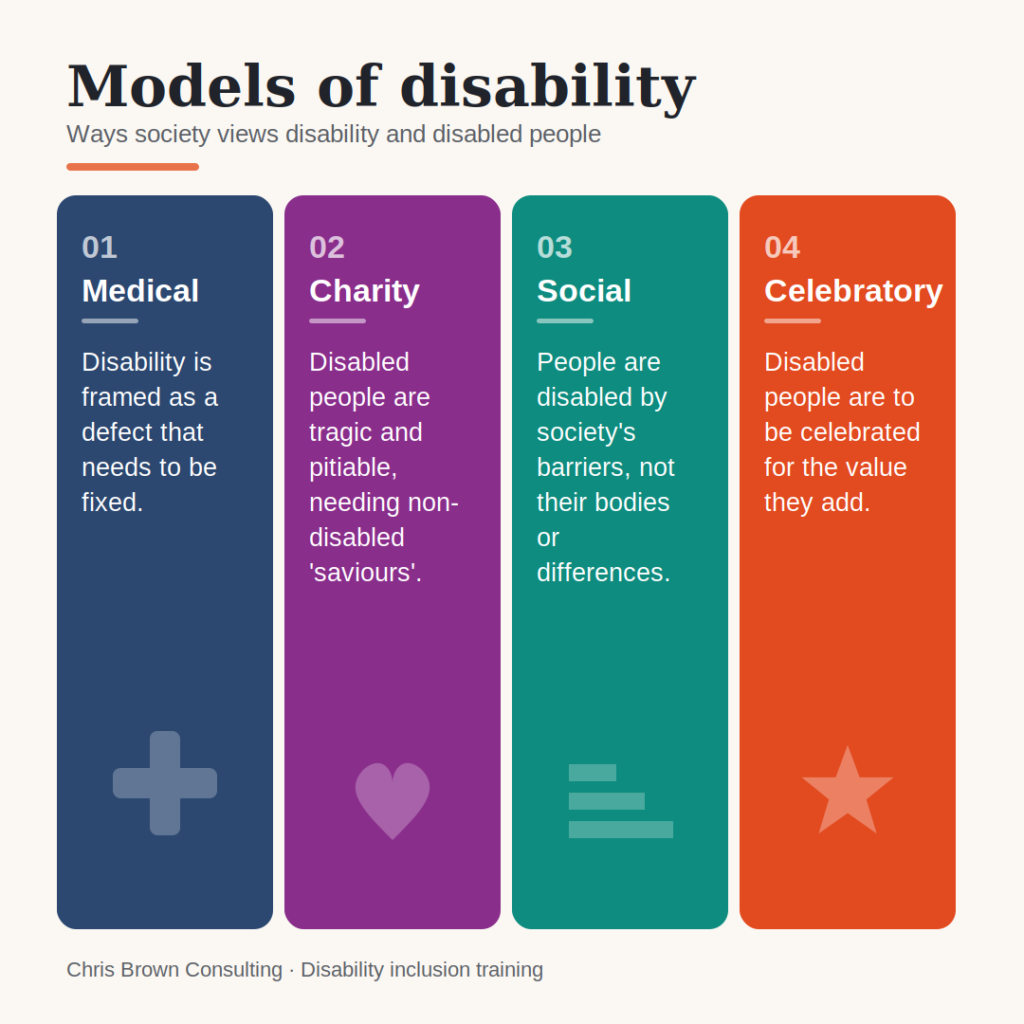
Following on from my last post about coming to identify as disabled, this one sets out the four models of disability I use in my training. The medical and charity models, dominant in Western Europe from the 1800s to the mid-1900s, frame disabled people as something to be fixed or pitied.
The social model, developed by disabled people over the last 40 years, locates the problem in society’s barriers instead, and underpins the legal duty to make reasonable adjustments. The celebratory model goes further still, recognising disabled people’s unique strengths and aligning with the UN Convention on the Rights of Persons with Disabilities.
Understanding these models has been central to undoing my own internalised shame, and I use them to help organisations think differently about disability inclusion.